
Buying guide
Hybrid vs. Gas in Canada: Is a Hybrid Worth the Extra Cost?
Start with the extra price and the distance you drive
A hybrid can be worth paying more for when you drive enough kilometres to recover the extra purchase cost before you sell. A small price premium, a meaningful fuel saving and a long ownership period make that easier. Low annual mileage or a large price gap can favour gasoline.
For example, a hybrid that costs $4,520 more after tax and saves $800 a year in fuel takes 5.65 years to earn back the difference. Keep it for five years and the fuel savings fall short. Keep it for eight years at the same mileage and prices, and they exceed the premium by $1,880.
Those are hypothetical numbers. Here is how to replace them with your own—and how to decide whether the result fits your plans.
Calculate your fuel-only break-even point
Gather four things: the two purchase totals, each vehicle’s fuel consumption in litres per 100 kilometres, your annual kilometres and the price of the fuel each vehicle needs. All dollar amounts below are Canadian.
Use these steps:
- Find the extra purchase cost. Subtract the gasoline vehicle’s price from the hybrid’s price, including applicable taxes and charges on the same basis.
- Calculate each annual fuel bill. Annual kilometres ÷ 100 × L/100 km × dollars per litre.
- Find the annual saving. Subtract the hybrid fuel bill from the gasoline fuel bill.
- Find the payback time. Extra purchase cost ÷ annual fuel saving = years to fuel-only break-even.
Use each vehicle’s required fuel grade and its corresponding price. If one needs premium gasoline, calculate the two bills separately.
This result tells you when fuel savings cover the purchase premium. Interest, insurance, maintenance and resale belong in a separate ownership-cost comparison.
Before comparing fuel savings, work out your total car budget. That gives you a price range for both versions.
A worked Ontario example
Assume two hypothetical vehicles using the same grade of gasoline:
| Input | Assumption |
|---|---|
| Gasoline vehicle consumption | 9.0 L/100 km |
| Hybrid consumption | 6.5 L/100 km |
| Fuel price | $1.60/L |
| Hybrid price premium before tax | $4,000 |
| Hybrid price premium after 13% HST | $4,520 |
The tax calculation assumes two equally taxable Ontario dealer purchases with all other charges equal: $4,000 × 1.13 = $4,520. The Canada Revenue Agency explains Ontario’s 13% HST rate. When your quotes already include tax, subtract their totals without adding tax again.
For quotes with a trade, deposit or accessories, use the Ontario taxes and fees breakdown to find the two purchase totals.
At 20,000 km a year, the gasoline vehicle uses 1,800 litres, costing $2,880. The hybrid uses 1,300 litres, costing $2,080. That saves 500 litres and $800 a year.
Divide $4,520 by $800 and you get 5.65 years. The hybrid saves four cents per kilometre in this example, so it reaches fuel break-even at 113,000 km.
Three mileages, three different answers
Keep the same purchase premium, fuel consumption and fuel price, then change how far you drive:
| Driving per year | Gas fuel/year | Hybrid fuel/year | Saving/year | Payback |
|---|---|---|---|---|
| 10,000 km | $1,440 | $1,040 | $400 | 11.30 years |
| 20,000 km | $2,880 | $2,080 | $800 | 5.65 years |
| 30,000 km | $4,320 | $3,120 | $1,200 | 3.77 years |
The distance to break-even stays at 113,000 km. Higher mileage gets you there sooner.
The five-year owner: At 20,000 km a year, five years of fuel savings total $4,000. That leaves $520 of the premium unrecovered through fuel. The hybrid may still appeal for its equipment or the way it drives; the fuel saving alone has not covered the difference.
The lower-mileage owner: At 10,000 km a year, that same five-year saving is $2,000. With $2,520 still to recover, the lower purchase price of the gasoline vehicle deserves a close look.
The higher-mileage owner: At 30,000 km a year, five-year savings reach $6,000. That is $1,480 more than the purchase premium, before other ownership costs.
Check how fuel prices change the answer
A comparison should still be useful when the pump price moves. At 20,000 km a year, using the same vehicles and $4,520 premium:
| Fuel-price scenario | Saving/year | Payback |
|---|---|---|
| $1.30/L | $650 | 6.95 years |
| $1.60/L | $800 | 5.65 years |
| $1.90/L | $950 | 4.76 years |
These prices are calculation inputs, not forecasts. Try a lower and a higher price around what you pay. If the hybrid only recovers its premium at the highest price, your decision depends more heavily on future fuel costs.
Match the fuel ratings to your driving
A full hybrid combines a gasoline engine with electric drive. It can recover energy during braking, use electric assistance and reduce engine idling. These are the mechanisms described by the U.S. Department of Energy and EPA.
City trips and highway commutes
Frequent slowing and stopping create opportunities to recover energy and reduce idling. For a highway-heavy commute, compare the highway ratings of the actual vehicles. A hybrid can still save fuel on the highway; the size of that saving is what matters to the calculation.
Look up the exact Canadian model year, engine, drivetrain and configuration in Natural Resources Canada’s fuel consumption ratings tool. Lower L/100 km means less fuel used for the same distance.
For a closer estimate, weight the city and highway figures by your kilometres. If 30% of your distance is city driving and 70% is highway driving, multiply each vehicle’s city rating by 0.30 and highway rating by 0.70, then add them. Use the result in the annual fuel-cost calculation. Count distance, rather than the time you spend sitting in traffic.
Canadian winters
Cold starts, longer warm-up periods, idling and winter road conditions can increase fuel use in both gasoline vehicles and hybrids. Short trips are particularly affected because the engine spends more of each trip warming up. Cold battery conditions can also affect regenerative braking. The DOE/EPA cold-weather explanation describes these effects and their variation between vehicles.
Use full-year fuel records when you have them. When comparing a vehicle you have not owned, start with its ratings and check how a smaller fuel saving would affect your result. There is no single winter adjustment that describes every Canadian driver and vehicle.
Compare the versions you would actually buy
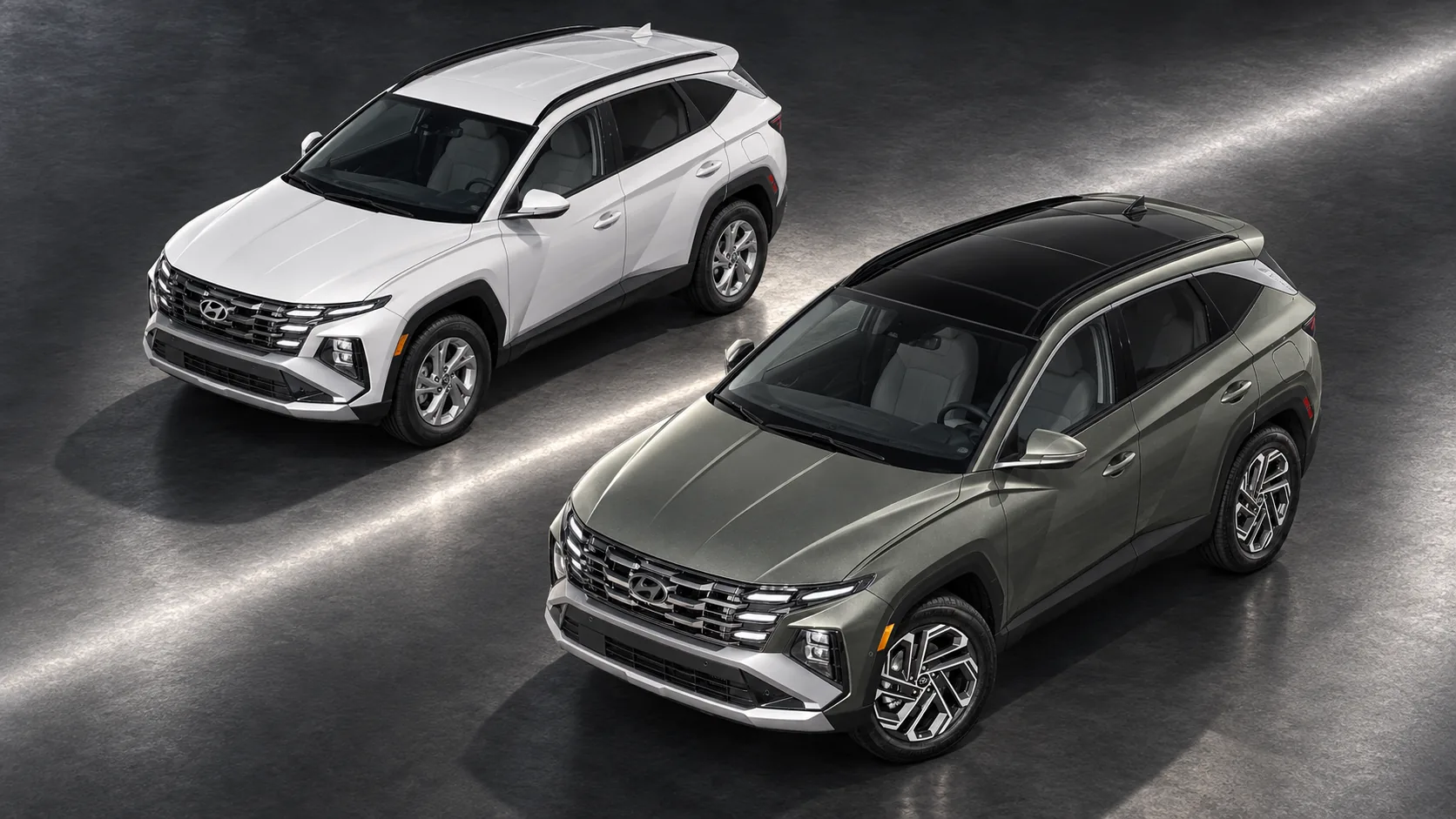
If you are choosing between a gasoline Tucson and a Tucson Hybrid—or two versions of another model—put the exact configurations side by side. A higher trim may include equipment you want as well as a different powertrain.
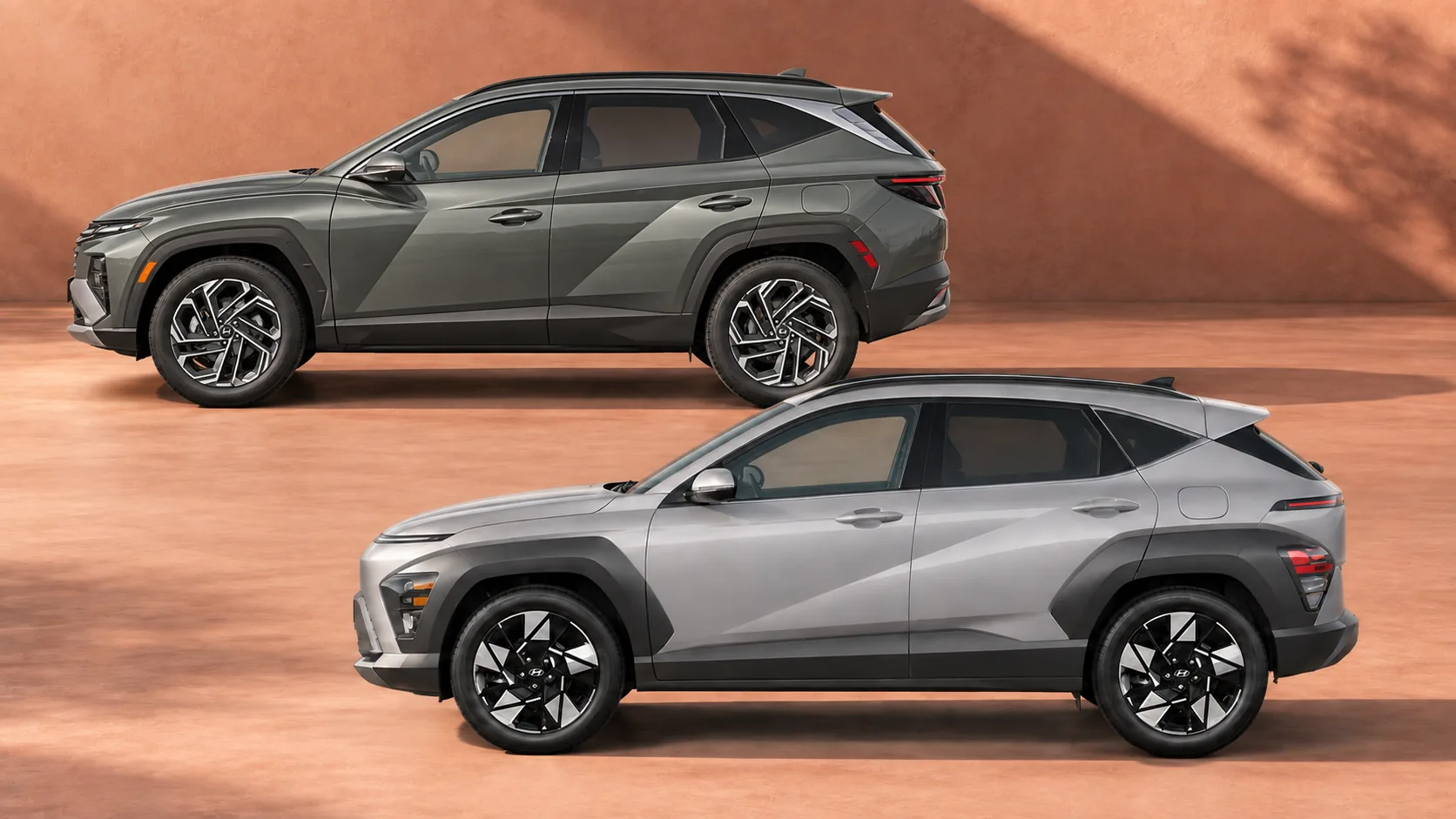
The Kona-versus-Tucson guide covers a comparison where both size and powertrain can change. Write down what the extra money buys beyond fuel savings.
Keep a simple two-quote worksheet:
| Record for each vehicle | What to compare |
|---|---|
| Model year, trim and drivetrain | The exact vehicles you would buy |
| Quote date and expiry | Prices available over the same decision period |
| Purchase total | Taxes, charges and chosen extras on the same basis |
| Equipment differences | Features you value and features you could skip |
| Fuel ratings and fuel grade | Consumption and cost for each configuration |
| Finance terms, if borrowing | Rate, term and total interest |
Use the actual cash difference for your budget. If the hybrid also adds equipment, describe those differences alongside the calculation. An invented dollar allowance for a sunroof or sound system would make the payback look more precise than it is.
Add the costs fuel savings leave out
For the years you plan to own the vehicle, compare:
Purchase price + financing interest + running costs − expected sale proceeds.
Running costs include fuel, insurance, maintenance and repairs. Keep the ownership period and expected kilometres consistent between vehicles.
- Interest: Compare borrowing costs using the actual quotes. The payment calculator can help you explore the loan amounts, rates and terms.
- Insurance: Get a quote for each exact vehicle and use the difference over your planned ownership period.
- Maintenance and repairs: Check the maintenance schedules and warranty terms. Coverage describes what is covered and for how long; it does not give you a battery replacement date or a future repair bill.
- Resale: Try a range of future sale values. A higher assumed hybrid resale value can improve the ownership calculation, but it does not change the fuel-only break-even point.
Because the purchase price already includes the vehicle’s cost, do not add loan principal again. If you are comparing a lease with a purchase, use the same end date and account for what you own or owe then. The lease-versus-finance guide walks through that comparison.
When gasoline may make more sense
Give the gasoline option serious consideration when its lower purchase price fits your budget better, your annual kilometres are low, you plan to sell before break-even, or the hybrid’s fuel advantage is small for your driving.
Give the hybrid a closer look when the premium is modest and the savings add up within the years you expect to keep it. Then compare comfort, passenger space, cargo needs and equipment. Fuel cost is one part of finding a vehicle you want to own.
Common questions
Is a hybrid worth it at 10,000 km a year?
It depends on the premium. Our $4,520 example takes 11.30 years to pay back through fuel. Reduce the after-tax premium to $2,000, with the same fuel assumptions, and it takes five years. Mileage alone cannot settle the choice.
Does a hybrid need to be plugged in?
A conventional full hybrid does not. Its engine and regenerative braking charge the battery, as the Department of Energy explains. A plug-in hybrid can also charge from an external electricity supply. To compare a plug-in hybrid’s costs, include charging access, electricity prices and the distance you expect to drive on electricity.
What if the hybrid costs the same or uses no less fuel?
At the same purchase price, there is no premium to recover. If it costs less, it starts with a purchase-price advantage. Compare the ongoing costs next.
If a more expensive hybrid produces zero or negative annual fuel savings under your inputs, there is no fuel-only payback. At zero annual kilometres, both annual fuel bills are zero and fuel savings cannot recover a positive premium.
Make your gas-versus-hybrid checklist
Write down your annual kilometres, city/highway split, planned ownership period and the two vehicles you are considering. Add the quoted purchase totals and fuel ratings when you have them. Those details turn “Is a hybrid worth it?” into a comparison you can act on.
Use the car-buying checklist below to organize your vehicle needs. If these SUVs are on your shortlist, compare the Hyundai Tucson and Toyota RAV4, or compare the wider costs of buying new versus used.
Keep reading
How Much Car Can I Afford in Canada? A Realistic Budget Guide
Work back from what you can spend each month, including insurance, fuel and upkeep. Then turn the payment you have left into a purchase price, with tax and your down payment accounted for.
Hyundai Kona vs. Tucson in Canada: Do You Need the Larger SUV?
Start with the Kona if it fits your passengers and regular cargo. Compare the Tucson when extra room solves a daily problem, then put the upgrade cost beside that benefit.