
Buying guide
CPO vs. New Car Buying in Ontario: The Complete Financial, Warranty, and Regulatory Breakdown
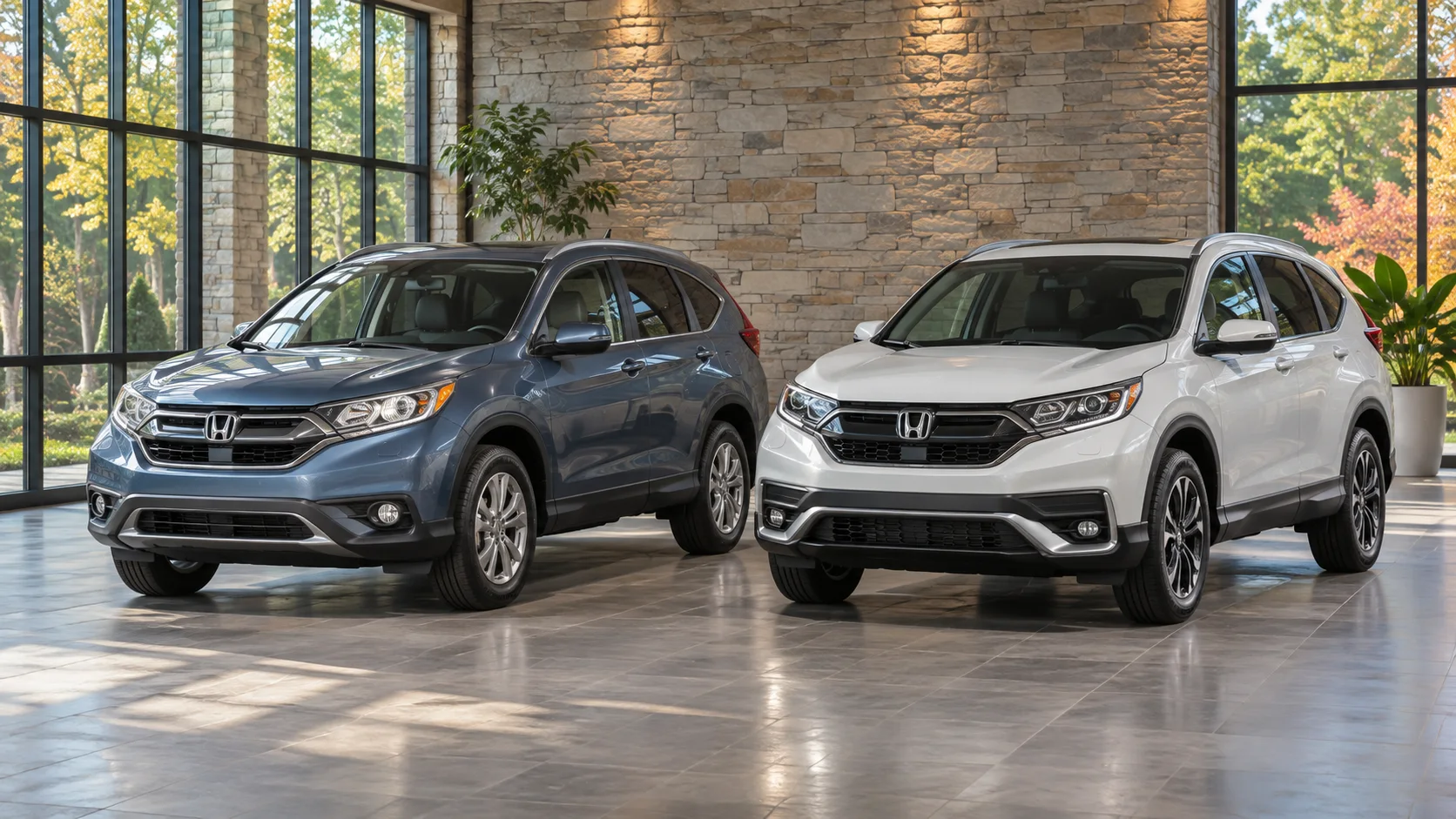
New or CPO: Where Your Money Goes
| The decision | Brand-new vehicle | Certified Pre-Owned vehicle |
|---|---|---|
| Upfront purchase price | Pay for an unused vehicle and its full starting warranty | Buy after the first owner has absorbed depreciation |
| Interest/finance rates | Manufacturer subsidies can slash borrowing costs | Higher used-car rates eat into the purchase-price saving |
| Factory warranty transferability | Coverage starts at the original in-service date | Eligible remaining coverage transfers; neither clock resets |
| OMVIC rights | Registered-dealer pricing and disclosure rules apply | The same legal protections apply, plus the written CPO benefits |
| Immediate depreciation | You absorb the change from new to used | You enter further down the depreciation curve |
Your QEW commute does not become shorter because you paid for a new-car smell. Buy new for a convincing combination of price, financing, equipment and warranty—not because somebody made the payment look small.
For Burlington, Hamilton, Oakville and GTA shoppers, the real comparison includes 13% HST, interest, kilometres and resale. Every dollar figure here is in CAD.
The Three-Year Depreciation Reality Check
A $40,000 vehicle can shed $10,000 before you buy it
A 25% drop turns a $40,000 vehicle into a $30,000 vehicle. Buying at that lower price lets the first owner take the initial hit.
Use this range to understand the dollars:
- A 20% decline removes $8,000, leaving $32,000.
- A 25% decline removes $10,000, leaving $30,000.
- A 30% decline removes $12,000, leaving $28,000.
Those are comparison scenarios, not an Ontario price forecast. AutoTrader Canada's benchmark is steeper: roughly 20% in the first year, then 10–15% annually.
A dealer's CPO asking price also pays for reconditioning, program benefits and margin. Compare it with other retail listings, not somebody's trade-in cheque.
Compare the car, not just the badge
A cheaper base trim with more kilometres is a different purchase from a loaded model with fresh tires and a clean service record. Match the drivetrain, equipment, condition and odometer before declaring a winner.
Pull comparable new listings and used listings across the Golden Horseshoe. Compare the CPO price with today's new-car selling price: last year's MSRP does not tell you what the new car costs now.
A $5,000 markup becomes $5,650 after HST, before borrowing costs. You get no extra cargo room, warranty or performance for that money.
Ontario Rules: Read the Price Before the Payment
Mandatory dealer fees belong in the advertised total
An Ontario dealer cannot advertise one price and then make mandatory administration, freight or certification charges a surprise at signing. The Ontario Motor Vehicle Industry Council—OMVIC—requires all-in dealer advertising.
HST and actual licensing costs can sit outside that price when clearly disclosed. Optional products you deliberately select add to the bill; mandatory products belong in the advertised total.
A manufacturer's MSRP is a different figure from a dealer's all-in advertisement. Get the dealer total in writing and compare it with the bill of sale.
CPO does not buy you a cooling-off period
Ontario has no general cooling-off period for car purchases. Signing first and sorting out the numbers tomorrow is a poor strategy.
Registered-dealer purchases carry disclosure rights, access to OMVIC's complaints process and eligibility-based protection through the Motor Vehicle Dealers Compensation Fund. Specific disclosure failures create cancellation rights; buyer's remorse does not.
Put promised repairs, delivery conditions and included equipment in the contract. A conversation beside the car is not the finished agreement.
Warranty: What the CPO Badge Actually Buys
Count the repairs, not the inspection points
A long inspection checklist earns its money when the dealer fixes what it finds. Ask for the completed report and reconditioning work order.
Manufacturer-backed CPO adds eligibility standards, inspection requirements and documented benefits to an ordinary used-car purchase. Check which warranty, roadside assistance and exchange provisions come with that specific vehicle.
Kia Canada's published brochure lists 149 inspection points, or 135 for non-hybrid and non-electric vehicles, plus a CARFAX report and a conditional exchange privilege. A dealer's own “certified” label does not establish enrolment in that manufacturer program.
Separate the three warranties on the desk
Factory coverage, CPO protection and a purchased service contract are three different things. Put their start dates, kilometre limits and covered components side by side.
- The factory warranty covers specified defects under the original manufacturer's terms.
- CPO protection adds the benefits written into that manufacturer's program.
- An extended warranty or service contract carries its own exclusions, deductible, claim limits and administrator.
Roadside assistance can get the car to a repair shop. It does not automatically pay the repair invoice.
Kia's five-year warranty changes the used-car calculation
Kia Canada's five-year/100,000 km comprehensive warranty gives a used buyer substantial coverage to work with. Eligible remaining coverage transfers to the next owner.
The clock starts at first service, not when you buy the CPO car. For a Kia exactly two years into service, the arithmetic is:
| Current odometer | Remaining standard comprehensive coverage |
|---|---|
| 60,000 km | Up to three years or another 40,000 km |
| 40,000 km | Up to three years or another 60,000 km |
| 20,000 km | Up to three years or another 80,000 km |
Whichever limit arrives first ends that coverage. Wear, maintenance and components with shorter warranty periods remain separate.
Honda's basic warranty runs three years/60,000 km. A two-year-old Kia showing 20,000 km can match that remaining calendar coverage and beat its distance allowance; one showing 60,000 km cannot.
Drive 25,000 km a year and a 40,000 km balance disappears in about 19 months. A Hamilton-to-Oakville commute eats through warranty kilometres faster than a low-mileage Burlington household does.
Use the Kia model hub to choose the vehicle, then get its actual warranty balance in writing.
The 60-Month Ontario Financing Test
A lower rate does not erase a higher price
The new car in this example borrows at 2.99% APR; the CPO borrows at 8.99% APR. These are worked-example rates, not advertised offers.
Manufacturer-subsidized—or subvented—financing explains how a new-car rate can undercut a used-car loan. Compare the total borrowing cost and any cash rebate sacrificed to get that rate.
Our new vehicle starts at $40,000 MSRP, with an assumed $2,500 in freight, PDI and mandatory charges already included in its $42,500 dealer price. The CPO equivalent costs $30,000 all-in before HST and licensing.
Both examples finance the full purchase and HST over 60 monthly payments, with no down payment, trade-in, optional products or separate borrowing fees.
| Cost | New | CPO |
|---|---|---|
| Dealer price before HST and licensing | $42,500.00 | $30,000.00 |
| HST at 13% | $5,525.00 | $3,900.00 |
| Amount financed | $48,025.00 | $33,900.00 |
| Example APR | 2.99% | 8.99% |
| Monthly payment | $862.73 | $703.54 |
| Interest over 60 months | $3,738.98 | $8,312.62 |
| Total loan payments | $51,763.98 | $42,212.62 |
| New plates and permit, paid separately | $59.00 | $59.00 |
| Total purchase, tax, interest and licensing | $51,822.98 | $42,271.62 |
Monthly amortization produces these figures; totals use unrounded payments, with a final-payment rounding adjustment. ServiceOntario lists $59 for new plates with a permit and $32 for a vehicle permit—use the charge that matches your transaction.
The CPO wins this purchase comparison
The CPO saves $12,500 on price and $1,625 on HST. Its higher interest bill takes back $4,573.64.
You still keep $9,551.36, or about $159.19 a month over five years. Cheap new-car financing has narrowed the gap, not closed it.
Financing the tax means paying interest on the HST as well as the vehicle. A cash down payment reduces your loan; it does not reduce the taxable selling price.
Use the same term and down payment for both quotes. The Financial Consumer Agency of Canada confirms that dealers do not have to present the lowest available rate, so get a competing quote.
An 84-month term does not fix an overpriced car
Stretching a loan to seven years changes the payment, not the selling price. If that is the only way a base-trim compact SUV fits your budget, move down in price.
A two-year-old CPO car will be nine when an 84-month loan ends. That leaves plenty of time for repair bills to join the loan payment.
Put your quote to the test
Enter the selling price, down payment and trade details to estimate your payment and total interest.
Total Ownership Cost: The Car Still Has Value at the End
A $9,551 financing advantage is not automatically a $9,551 ownership saving. The newer vehicle also has a resale value to subtract from its costs.
Use this formula: purchase including HST + interest + licensing + running costs − resale proceeds.
Set five-year resale assumptions at $20,000 for the new car and $14,000 for the older CPO. That shrinks the CPO advantage to about $3,551.
Budget another $1,500 of CPO repairs and maintenance above the new car's costs, and the advantage falls to $2,051. These are planning inputs; replace them with your own model-specific estimates.
Add insurance quotes, winter tires, fuel or charging, parking and 407 ETR tolls. At 25,000 km annually, a difference of 1 L/100 km burns another 250 litres every year.
Sitting in QEW bumper-to-bumper traffic changes fuel use. A February blizzard on the 403 makes tire condition matter far more than another screen animation.
The Kia EV Lease: A High-Tech Exit From an Overpriced CPO Quote
A new Kia EV lease is the first counteroffer to put beside an inflated CPO price. For a driver replacing cars every three or four years, it offers a direct route into current technology without buying the vehicle outright.
The Niro EV, for example, brings an electric drivetrain and a digital cockpit; Kia Canada describes paired 10.25-inch instrument and multimedia displays. Compare Kia electric lease options before paying a premium for an older vehicle.
A low lease payment earns attention; the complete lease earns the decision. Add the non-refundable cash due at signing to all scheduled payments, taxes and fees, counting each charge once.
Price the contract for your real commute. A 12,000 km annual allowance is a bad match for a driver covering 25,000 km; buy the right allowance before signing and put home charging into the budget.
A closed-end lease lets you return the vehicle under its kilometre and condition terms instead of selling it into the used market. You also finish without an owned car, so compare that lease cost with purchase costs after resale over the same period.
That is the useful backdoor around inflated pricing: compare a supported new Kia lease before accepting an expensive used-car loan. Open the Kia EV buying guide and request the exact trim, cash due, term and kilometres together.
Five Checks Before You Sign
1. Read the history before the sales pitch
A clean-looking car still needs a history check. Match the VIN, confirm OMVIC registration and request CARFAX Canada, lien information and service records.
Read collision entries and prior-use details. Required disclosures belong in the contract even when the dealer does not supply a physical history report.
2. Make the inspection produce evidence
“Inspected” does not tell you how much brake pad or tire tread remains. Get the measurements, completed CPO report and reconditioning invoices.
Take the used-car test-drive checklist, start the car cold and check braking, steering, heating and highway noise. Use an independent inspection to resolve unexplained symptoms or repair history.
3. Get the warranty end points
“Lots of warranty left” is not a number. Request the original in-service date, current odometer, expiry date and kilometre ceiling.
Check extended coverage, deductibles and roadside assistance separately. Divide the remaining kilometres by your annual driving to see how long the protection lasts.
4. Check the Ontario safety certificate
The Safety Standards Certificate records minimum safety compliance on the inspection date. Its 36-day validity is not a 36-day warranty.
For an ordinary used-car purchase, you need the SSC to register the vehicle as fit and plate it for normal road use. Ownership can transfer without it; get the certificate confirmation and check the inspection date against delivery.
5. Reconcile every dollar
The bill of sale must reconcile with the dealer's advertised all-in price, HST, licensing and options you selected. Remove unwanted extras and record promised work.
Read the APR, payment frequency, term and total obligation together. Refuse to let a smaller weekly number end the conversation.
The Verdict: Make the More Expensive Choice Earn Its Price
Buy the CPO when its verified condition, remaining warranty and ownership math leave you ahead. In our purchase example, it clears the financing hurdle by $9,551.
Buy new when its complete cost and useful equipment justify the premium. Put a Kia EV lease ahead of an overpriced used-car quote when you want current technology and a defined replacement cycle.
Start with current inventory, then use Find My Car to set your budget, commute and space requirements. Bring back comparable quotes—and make every extra dollar explain itself.
Published by Next Car Guide.
- Source review
- Review due
Keep reading
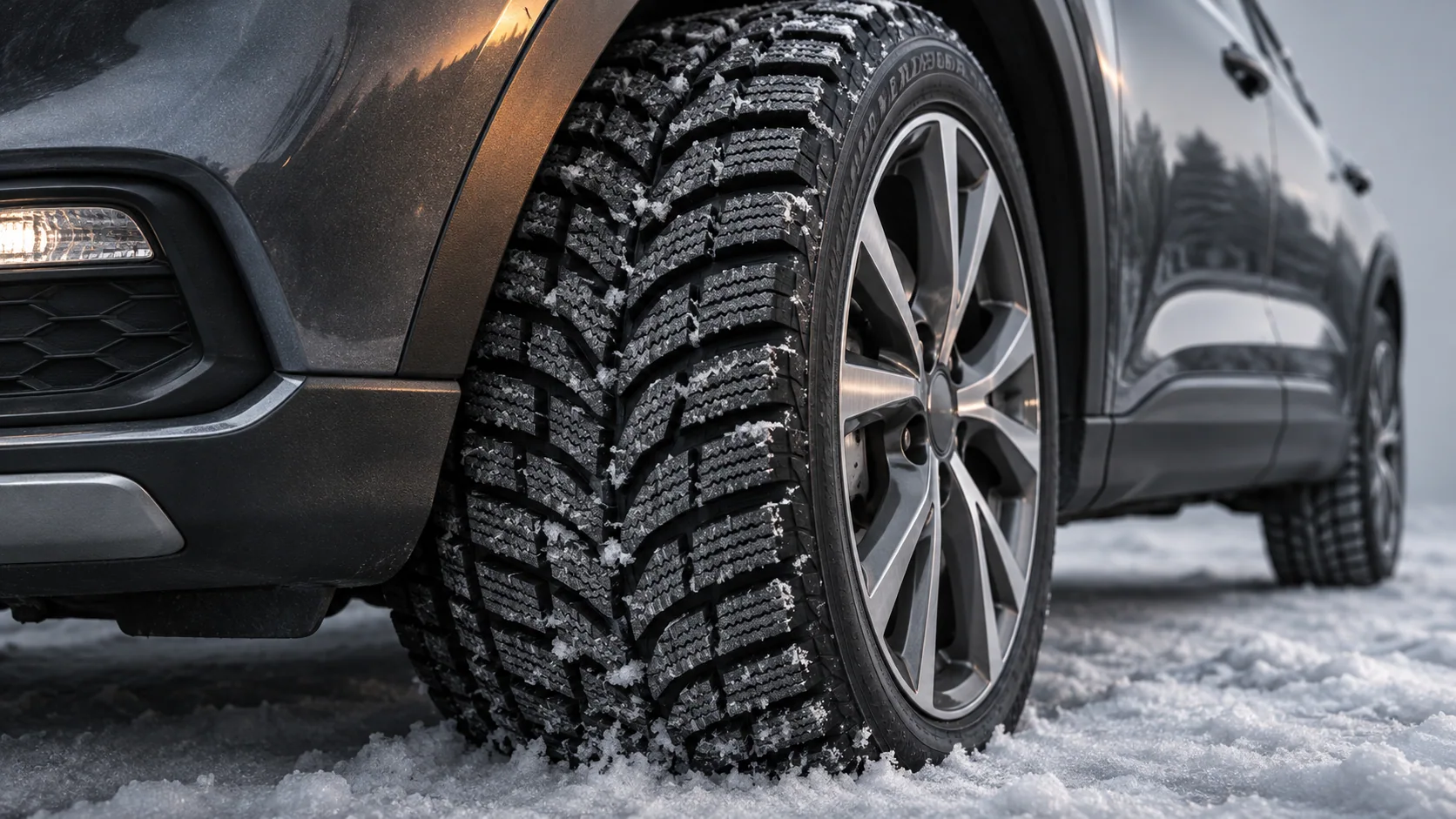
Do You Need AWD for an Ontario Winter? Start With Your Tires
Four winter tires are the first purchase for a snowy commute. All-wheel drive earns its extra cost when getting moving uphill or pulling out of an unplowed lane is a regular problem.
How to Compare Car Lease Deals in Ontario
A $399 lease with $3,600 down costs $499 a month over three years in our example. A $469 zero-down quote beats it when both cover the same driving.